
10 Content Creator Ideas for Short-Form Video, With Data
Ten repeatable short-form video formats for TikTok, Reels and Shorts, with sample hooks, platform rules and Revid's data on which formats get the most views.
On this page
The best content creator ideas for short-form video are repeatable formats, not one-off clips. The ten here are trend remixes, how-to series, Reddit stories, before-and-after transformations, hot takes, behind-the-scenes, rankings, turning-point stories, niche expertise and community features. Pick the one that matches what you already have and publish it as a series.
The format you pick shapes your views before you film a single frame. In Revid's analysis of 176,367 TikToks with 1,000+ likes posted between October 2025 and October 2026, challenges had a median of 182K views and comedy 155K, while tutorials sat at 62K. Formats that invite participation or a laugh travel further. Plain teaching needs sharper packaging to compete.
Challenges and comedy passed 1M views about twice as often as tutorials and storytelling, which are the most common formats.
Source: Revid analysis of 176,367 TikToks with 1,000+ likes posted between Oct 1, 2025 and Oct 16, 2026 (61,203 creators)
Show the data
| Median views | Share that passed 1M views | |
|---|---|---|
| Challenge | 182.3K | 25.6% |
| Comedy | 154.8K | 22.1% |
| Reaction | 104.8K | 16% |
| Dance | 83.8K | 15.5% |
| Storytelling | 66.1K | 12.2% |
| Lip Sync | 61.7K | 12.3% |
| Tutorial | 61.9K | 12.1% |
This is TikTok data, and the sample only holds videos that already cleared 1,000 likes. It shows what successful videos have in common, not what causes success. The full method is in Revid's study of what makes a TikTok go viral. Use it to choose and package a format, then test the same format on Reels and Shorts.
- Median views for challenge TikToks, the top format measured
- 182K
- Revid analysis of 176,367 TikToks
- Share of challenge TikToks that passed 1M views
- 25.6%
- Revid analysis of 176,367 TikToks
- Median views for faceless tutorials, against 52K for on-camera tutorials
- 156K
- Revid TikTok data
- Median views for TikToks with under 40 characters of speech
- 123K
- Revid TikTok data
The 10 content creator ideas at a glance
| Idea | What powers it | Effort | Shelf life | Start here if you have |
|---|---|---|---|---|
| Trend remixes | A sound viewers recognize | Low | Short | Speed and a niche angle |
| How-to series | A problem solved | Medium | Long | Knowledge people ask about |
| Reddit stories | A conflict with a verdict | Low | Medium | A clear niche and a voice |
| Before and after | Visible change | Medium to high | Long | Documented projects |
| Hot takes | Your reasoning | Low | Short | Opinions you can defend |
| Behind the scenes | Process and decisions | Low | Medium | Work you already do |
| Rankings | A scoreboard with criteria | Medium | Long | Options to compare |
| Turning-point stories | Stakes and a choice | Medium | Long | Real stories, with consent |
| Niche expertise | Depth in one subject | High | Long | Deep subject knowledge |
| Community features | Viewer submissions | Medium | Medium | An audience that comments |
A format beats a single idea because it repeats. You keep the engine (the structure, the promise, the look) and change the surface: the subject, the hook, the first visual, the example. That is how you publish every week without starting from a blank page.
1. Trending audio remixes
A trending sound gives viewers a familiar rhythm and a reason to stop scrolling. Your job is to give it a new purpose in your niche. A finance creator reveals a budgeting mistake on the beat drop. A language teacher syncs vocabulary to the rhythm. A food creator matches each beat to a recipe step.
Sample hook, as on-screen text over the sound: "POV: you open your bank app on Monday morning."
- Find sounds early: check the list of viral TikTok songs and watch how the top videos use each sound before you pick one.
- Let text carry the idea: in Revid's TikTok data, videos with under 40 characters of speech had a 123K median, against 68K for videos that talked throughout. Sound-led formats work with on-screen text and little narration.
- Make variations, not copies: same sound, new hook, new example, new camera angle.
- Post while the sound is live: a trend saved for next month's calendar is usually gone by then.
Check the platform rules before you scale this format:
- On TikTok, videos with lip syncs or copyrighted music playing over one minute are not considered original for the Creator Rewards Program. Treat remixes as a reach play, not an earnings play.
- On YouTube, any Short longer than one minute with an active Content ID claim is blocked globally. Keep music remixes under a minute, or use the Shorts Audio Library, where most songs can be used for up to 90 seconds.
The rule: use the sound as packaging, never as the whole idea.
Prompt to try
Make a 30-second faceless cooking tutorial titled "Why your garlic turns bitter". Open with the hook "Your garlic is bitter because of this", show the golden result first, then three close-up steps of hands slicing and cooking garlic on low heat with the key temperature on screen. End with the most common mistake and tease the next episode. Clean, bright kitchen style with bold captions.
Faceless tutorials earned about 3x the median views of on-camera tutorials (156K vs 52K).
Source: Revid analysis of 176,367 TikToks with 1,000+ likes posted between Oct 1, 2025 and Oct 16, 2026 (61,203 creators)
Show the data
| Median views | Share that passed 1M views | |
|---|---|---|
| Faceless tutorials | 155.6K | 22.1% |
| Product or object tutorials | 80.7K | 14.9% |
| On-camera tutorials | 52.5K | 10% |
| Faceless storytelling | 72.7K | 13.3% |
| On-camera storytelling | 64.4K | 11.7% |
| Faceless comedy | 326.7K | 26.4% |
| On-camera comedy | 135.5K | 20.7% |
2. How-to series and tutorial breakdowns
Tutorials get saved because they solve a problem. The usual mistake is a topic that is too broad. "How to cook better at home" is a channel, not an episode. "How to stop garlic from burning", "how to sharpen a knife safely" and "how to fix a split sauce" are episodes, each with its own hook.
Use the same template for every episode:
- Open with the problem in the viewer's words: "Your garlic is bitter because of this."
- Show the finished result in the first seconds.
- Give the steps, one per shot, with the key term or measurement on screen.
- End with the most common mistake, or tease the next episode.
You don't have to be on camera. In Revid's TikTok data, faceless tutorials (hands, screen recordings, diagrams) had a 156K median, against 52K for on-camera tutorials. Close-ups of the work often teach better than a talking head.
Revid's educational video maker turns a lesson, script or article into a narrated draft with captions and visuals. Check every step against what you actually do, and replace generic lines with your own explanation.
Adapt the opening per platform. On TikTok, lead with the question. On Reels, lead with the result. On Shorts, lead with a search-style problem such as "why is my garlic bitter".
3. Reddit stories and niche community threads
Online communities are full of conflicts, confessions and decisions that make strong narration: an r/AmItheAsshole dilemma, an r/UnpopularOpinion debate, a malicious compliance story. Viewers stay to hear the verdict.
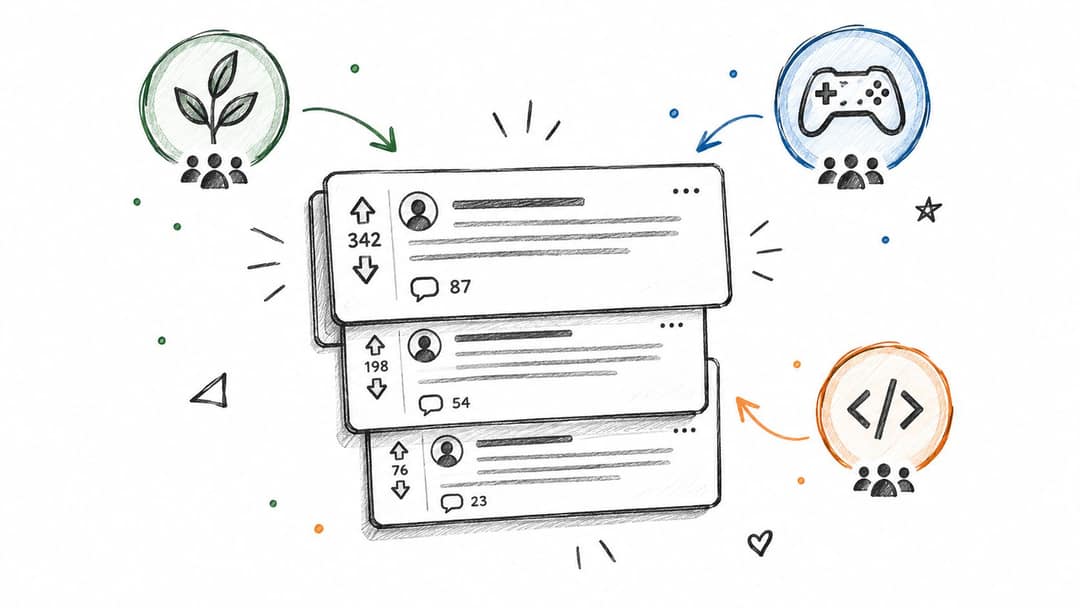
Read the whole thread before you write the script. A top comment pulled out of context can flip the story, and viewers who know the original will call it out.
Add editorial value to every episode:
- Pick a lane: one community or one type of conflict, so viewers know what your channel is for.
- Give a verdict: summarize the conflict, name the turning point, say what you would do and why.
- Protect people: remove names, usernames, locations and any detail that identifies someone.
- End with a real question: "Was she wrong to cancel the wedding?" pulls better comments than "Thoughts?"
Revid's Reddit story video generator turns a topic or an AskReddit thread into a narrated story video for TikTok. Write your own commentary and verdict into the script before you generate, so the video is yours and not a reading.
4. Before and after transformations
A transformation turns visible change into a repeatable series. It works for room makeovers, fitness progress, photo edits, design revisions, baking practice and business processes. The subject changes every episode, the structure doesn't.
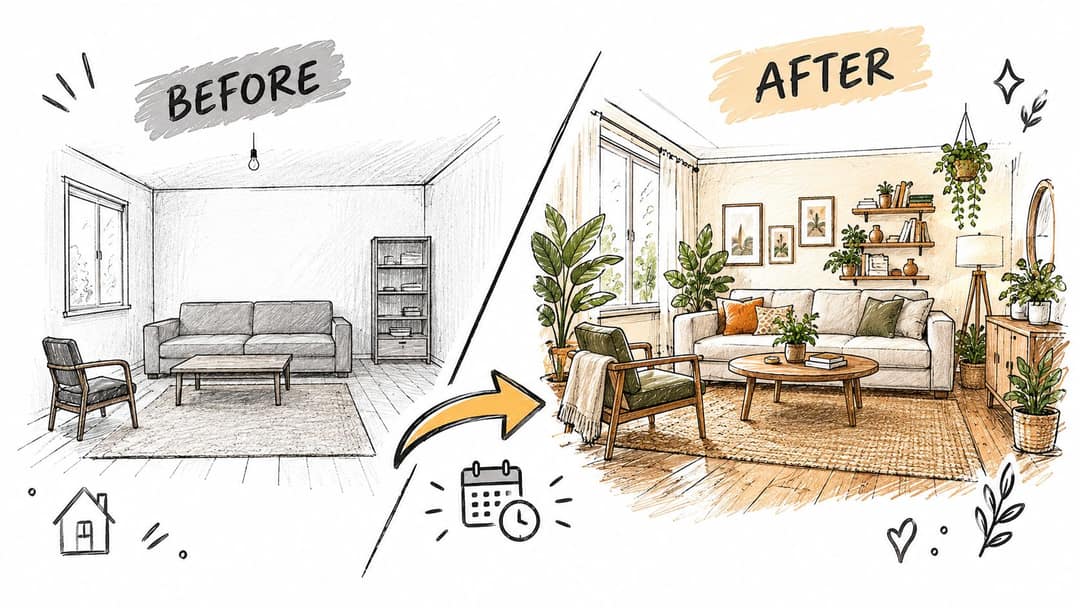
The reveal earns the view. The decision behind it earns the follow. Use this sequence:
- Flash the final result for a second.
- Cut back to the starting point and name the problem.
- Show the change that mattered, including a failed attempt if it teaches something.
- End on the finished result and a real reaction.
Sample hook: "This room took one weekend and no new furniture."
Keep comparisons honest. Match the camera angle and lighting on both sides, and never filter or crop only the "after". If you mention a timeframe or result, base it on what you actually recorded.
On TikTok, use the reveal as the opening. On Reels, a clean split-screen gets saved. On Shorts, narrate the decisions in order so a viewer who doesn't know you understands why the change happened.
5. Hot takes and opinion commentary
Commentary works when your reasoning is the format, not the topic. Every episode follows the same chain: the claim, the evidence, the strongest counterargument, your verdict. Viewers can disagree with the conclusion and still respect how you got there.
Emotion drives this format. In Revid's TikTok data, videos with an outrage mood had a 156K median and humor 121K. Strong emotion travels, but outrage you can't back up costs you trust. Aim for disagreement with reasons, not rage bait.
Name the series so viewers know what to expect:
- "One feature, one flaw" for product or app reviews.
- "Advice I'd ignore" for your niche's most repeated tips.
- Sample hook: "Everyone recommends this camera. Don't buy it for vlogging."
- Sample hook: "This update solves the wrong problem."
When a story breaks, Revid's AI script generator can draft a script from the topic so you can react fast. Read the source yourself, keep documented facts separate from your interpretation, and correct the draft before you record.
6. Behind-the-scenes and day-in-the-life videos
Behind-the-scenes content shows the work, tools and setbacks behind a finished result. A list of errands has no tension. A video about changing your packaging after customers struggled to open it has a problem, a choice and an outcome. Build each episode around one decision like that.
How you film matters. In Revid's TikTok data, POV videos had a 107K median and screen recordings 91K, while selfie-style videos had 48K. Show what you see and what's on your screen, not just your face talking about it.
- Show the imperfect version: mistakes and revisions make the process believable.
- Keep one thread: a challenge, a question or a decision runs through the whole video.
- Protect private details: blur customer information, documents and personal data.
- Repeat the setting: a studio session or a weekly production diary becomes a recognizable series.
Collect short clips during the week and edit them in one batch. On TikTok, use quick cuts and candid narration. On Reels, lean into atmosphere and craft. On Shorts, a direct voiceover explains what viewers are seeing.
Prompt to try
Create a 45-second vertical ranking video: "Storage fixes for small apartments, ranked from worst to best." State the criteria (cost, setup time, usefulness) on screen first, then rank five fixes with one "best for" label each, moving fast through obvious picks and slowing down for close calls. Use numbered cards and an energetic voiceover, and end by asking which fix viewers would move up.
7. Rankings and top 10 lists
A ranking works like a scoreboard: viewers stay to see what wins. What makes it credible is the criteria. State them before the first entry, and pick the number of entries the topic deserves instead of forcing ten.
Any category with real options works: storage fixes ranked by usefulness, landing-page mistakes ranked from easiest to hardest to fix, or apps and tools, like this external ranking of Character AI alternatives.
Sample hook: "Storage fixes for small apartments, ranked from worst to best."
- Give every entry a job: one detail, one limitation or one "best for" label, so viewers compare instead of hearing names.
- Show the criteria on screen: cost, setup time, durability or skill level.
- Vary the rhythm: move fast through obvious entries, slow down for close calls.
- Invite disagreement: ask which entry viewers would move up or remove.
Rankings also work as carousels and posts, as covered in our guide to content ideas for social media. On TikTok, reveal the top pick early. On Reels, use numbered cards. On Shorts, answer a focused search question.
8. Turning-point stories (motivational content that isn't generic)
"Believe in yourself" content is crowded and weak. In Revid's TikTok data, videos with an inspirational mood had a 45K median, the lowest of the moods measured, while sad videos had 104K. Audiences reward a story with real stakes, not a slogan over stock footage.
Tell one turning point, not a life story: an athlete returning from injury, a founder dropping a failed product, a student stuck on a hard skill. Start where the outcome could still go either way.
Ask these questions while editing:
- What was at stake? Name the consequence of failing.
- Which detail proves the struggle? A missed attempt or a changed plan beats a broad claim.
- What did the person control? Separate their choices from luck and outside help.
- What can viewers try? End with a practice, a question or a next step.
Use someone else's story or words only with their permission. Keep music under the narration, never over it.
9. Niche expertise series
A narrow subject turns scattered questions into a steady supply of episodes: sourdough fermentation, rare plant care, one programming language, one era of music. Viewers return because each video adds to the same body of knowledge.
The niche itself shapes your ceiling. Revid's study of views across 46 TikTok themes found that love beats money about 7 to 1. Pick a niche you can sustain, and know what kind of reach it tends to get.
Map the series before you film:
- Audience: beginners, hobbyists, working professionals or advanced practitioners.
- Question bank: recurring problems from comments, forums and niche communities.
- Learning path: basics, then diagnosis, then comparisons, then advanced use.
- Proof: your process, sources, experiments or results on screen.
Say where advice stops applying (a fix for a young plant may hurt an established one). Specialist audiences catch mistakes fast, and stating limits is what makes them trust the rest.
10. Community features and viewer submissions
Community content runs on your viewers: they submit a result, a response or a remix, and you turn it into the next episode. Participation is the strongest format in Revid's TikTok data, with challenges at a 182K median and 25.6% of them passing 1M views.
Make the invitation specific:
- Set the prompt: what to submit, the topic, the deadline and how to tag it.
- Get permission: say whether you may edit and repost, and never promise every entry will appear.
- Credit on screen: tag each creator and label their contribution.
- Moderate: remove entries that show private information or other people without consent.
A fitness creator can feature form checks, an art channel can collect responses to a themed prompt, and a brand can ask customers how they use the product. On TikTok, duets and stitches are not considered original for Creator Rewards, so treat them as community builders rather than earners.
How to choose your content creator idea
Start from what you already have, not from a list of ideas you like.
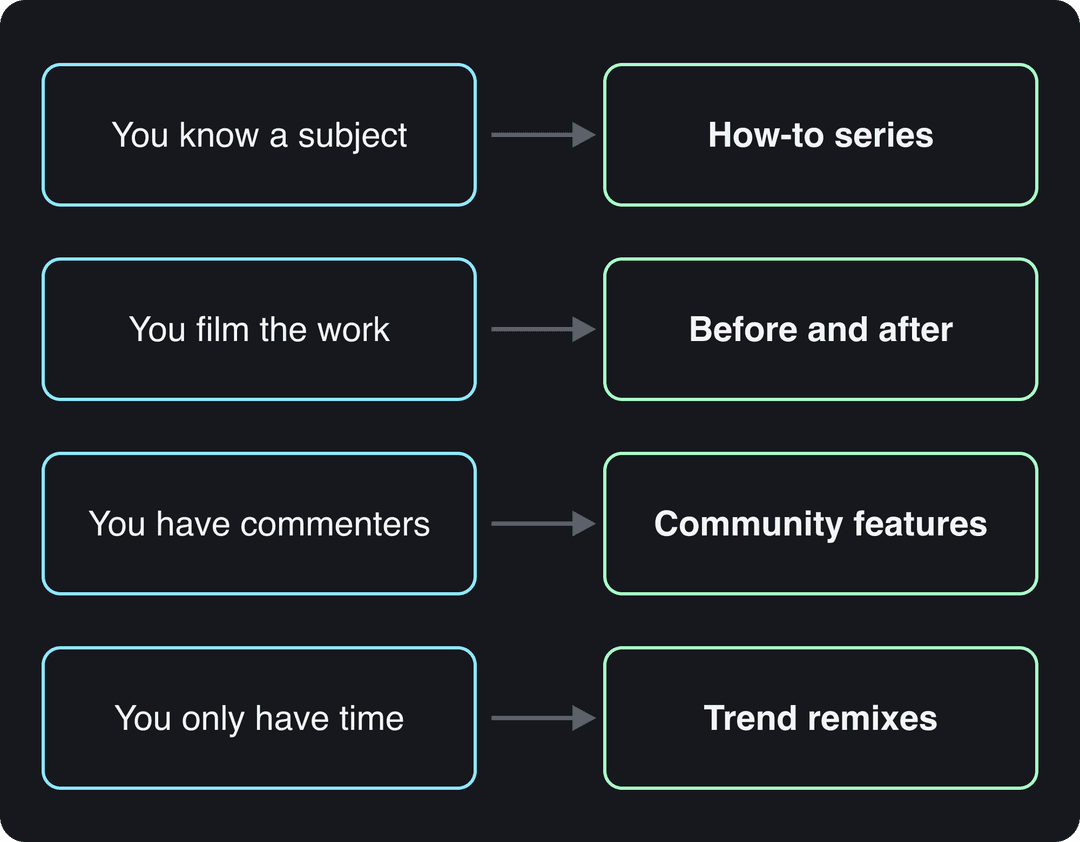
- If you can film only once a week, skip trend remixes. Pick tutorials, rankings or turning-point stories you can batch.
- If you have no audience yet, skip community features. Start with tutorials or process videos, which need no submissions.
- If you don't want to be on camera, use hands-only tutorials, Reddit stories with commentary, rankings or POV behind-the-scenes.
- If your camera roll already holds before and after footage, that is your first series.
How to build a format series with Revid
Revid starts from videos that already performed instead of a blank prompt:
- Search Revid's library of about 2.77 million short-form videos by topic, platform, engagement tier and length to find examples of your format. The workflow is described on the repurpose viral videos page.
- Open one and run Deep analysis (free, up to 60 a day) to see its hook, timed structure, scroll-stopping moment and a checklist to replicate it.
- Choose "Make it about your topic" to apply its hook style and pacing to your niche, or "Same energy, new script" for an original video on the same recipe.
- Fix any scene in the timeline editor, then publish or schedule to TikTok, Instagram and YouTube. Each post reports its views, likes and comments, and a winner can be remixed in one click.
For opening lines, start from these TikTok hooks and rewrite them in your niche's words.
Turn one format into a content system
Don't judge a format on one post. A good idea fails when the hook is vague, the first frame is weak or the caption doesn't match what the viewer expects. Test variations before you give up on the engine.
- Pick one engine: trends, teaching, community stories, transformation, opinion, process, rankings, stories, expertise or participation.
- Write the promise: what the viewer will learn, feel, compare or decide.
- Write several variations: change the opening line, first visual, example and closing prompt.
- Adapt per platform: a conversational opening for TikTok, a clean cover and tidy text for Reels, a direct title for Shorts.
- Read the response: retention, saves, shares and the questions in the comments.
- Batch the winner: produce a run of episodes only once you know which hook and structure land.
Instagram's trial reels help with step 3. They are shown first to non-followers and don't affect the ranking of your standard reels; they need a public account with at least 200 followers (professional) or 1,000 (personal). Keep length in check too: Reels can run 20 minutes, but reels over 3 minutes are not recommended to non-followers, and Shorts top out at 3 minutes.
The money side deserves the same planning. Goldman Sachs Research estimated in April 2023 that the creator economy could grow from $250 billion to $480 billion by 2027 (summarized in this creator economy statistics roundup), and Grand View Research projects growth from about $252.3 billion in 2025 to roughly $1.345 trillion by 2033 in its creator economy market report. Yet Goldman also estimated that of 50 million creators, only about 4% were professionals earning more than $100,000 a year. Pick a format that builds an audience you can reach again, not only views, as Yahoo Finance's look at creator economy trends also argues.
FAQ
What should I post as a new content creator?
Start with a how-to series or behind-the-scenes videos. Neither needs an existing audience to supply material, and both turn what you already know or do into repeatable episodes.
How do I never run out of content ideas?
Run a format, not a list of ideas. Keep one structure and swap the subject, then refill your question bank from comments, forums and videos in your niche that already performed.
Can I make these videos without showing my face?
Yes. In Revid's TikTok data, faceless videos had a 114K median and 17.4% passed 1M views, against 67K and 12.7% for one person on camera. Tutorials with hands, rankings and narrated stories all work with a faceless video generator.
Should I post the same video on TikTok, Reels and Shorts?
Yes, but adapt the first line, the caption and the cover for each platform rather than uploading one identical file. Check music rules first: a Short over one minute with an active Content ID claim is blocked.
Sources
- Revid analysis of 176,367 TikToks with 1,000+ likes posted between Oct 1, 2025 and Oct 16, 2026 (61,203 creators)
Charts and figures checked on November 6, 2026.