Creators publiceren elke maand 30.000+ video's met Revid
AI-prompt-naar-videogenerator
Prompt naar video zet een geschreven beschrijving om in een complete video. Beschrijf de scène, het verhaal en de stijl die je wilt, en Revid schrijft de verteltekst, genereert de beelden als AI-video of geanimeerde AI-afbeeldingen en voegt daarna een voice-over, muziek, geluidseffecten en ondertitels toe. Kies elke lengte van 8 seconden tot 5 minuten.
Jouw videoprompt
💡 Beschrijf in gewone taal wat je in de video wilt zien. AI genereert een script op basis van je prompt.
2,600 video's gemaakt met Revid in de afgelopen 24 uur
Klaar in een paar minuten · Pas alles aan voordat je post
Voorbeeldresultaten
Media: Stock videosRatio: 9:16
Vergelijkbare tools voor jou:
of ontdek onze 42+ andere tools om precies de video te maken die je wilt
**Recommended preset: Ultra Realism**
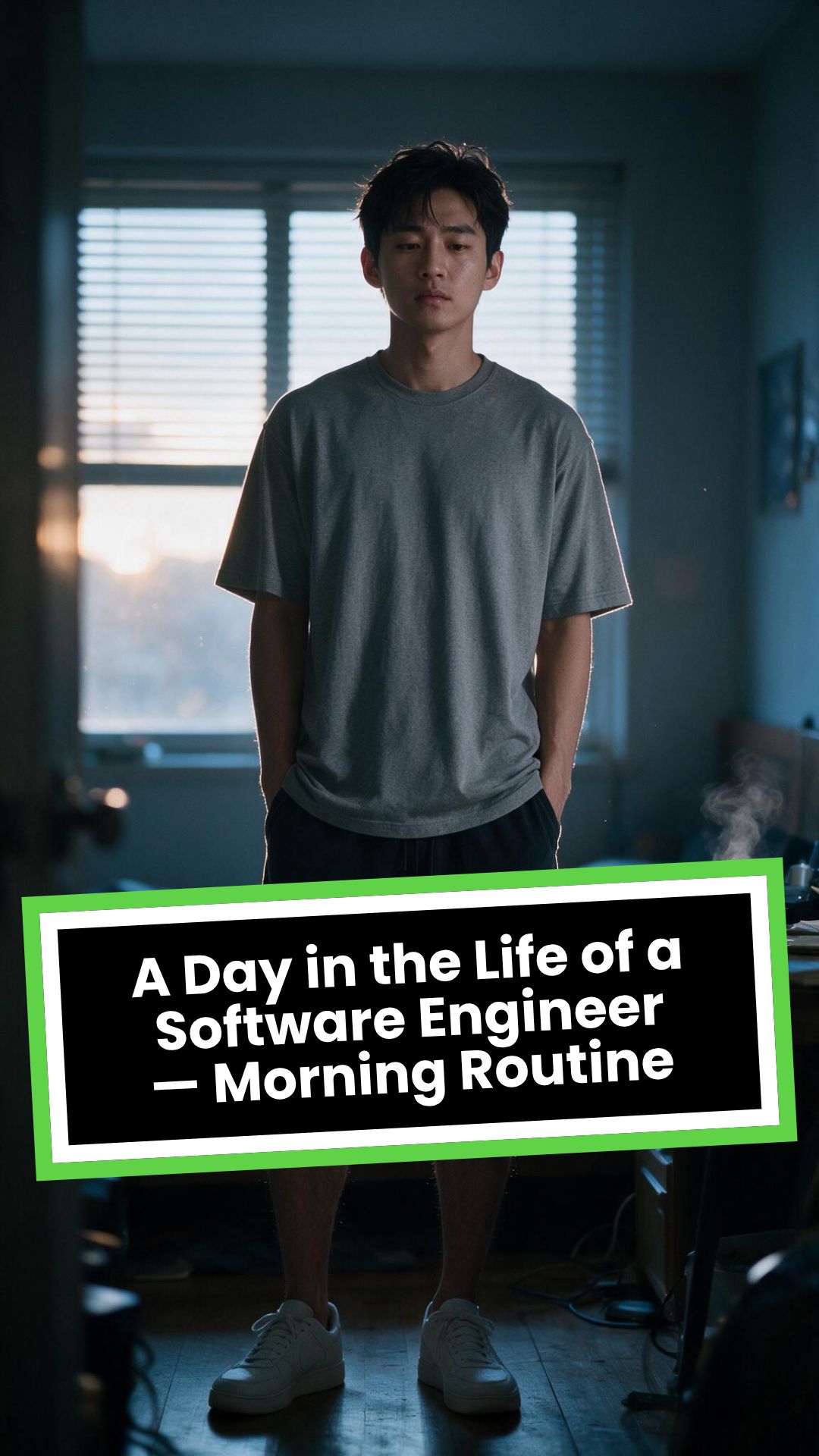
# A Day in the Life of a Software Engineer — Morning Routine
## STARTING FRAME
Extreme macro close-up of a smartphone resting face-up on a dark wooden bedside table in a quiet apartment bedroom before sunrise. The alarm reads **6:30 AM** in crisp white digits. The edge of the phone, tiny dust particles on the table, and the faint reflection of the screen are sharply detailed.
Several feet behind it, a young Asian man in his late twenties lies asleep beneath slightly rumpled bedding. He is only a soft, indistinct silhouette because of the extremely shallow depth of field. Cool blue-grey morning light leaks through partially closed curtains, creating faint horizontal shadows across the room.
A closed laptop, sleeping monitor, mechanical keyboard, notebook, headphones, water bottle, and hoodie resting over a desk chair are visible only as subdued background shapes.
The room is completely still.
Animate forward from this exact frame.
---
## [0s–3s] — THE ALARM
The camera remains extremely low, almost level with the bedside table.
For the first moment, nothing moves.
Then the alarm begins ringing.
The smartphone vibrates against the wooden surface in short mechanical pulses. One corner taps faintly against the table with each vibration. The glow from the screen reflects subtly across the wood grain.
Keep the sleeping man fully blurred in the background.
Do not reveal his face yet.
The curtains move almost imperceptibly from a weak draft. Distant traffic hums outside. A soft electrical ambience comes from the sleeping computer monitor.
Allow the alarm to interrupt the quiet rather than immediately triggering a reaction.
---
## [3s–6s] — THE FIRST REACTION
Begin a very slow rack focus away from the phone.
The alarm digits gradually soften.
The sleeping man’s shoulder, face, pillow, and blanket slowly resolve into focus.
He does not immediately wake.
His eyebrows contract slightly.
His head presses deeper into the pillow as though instinctively trying to escape the sound.
One hand shifts beneath the blanket.
His fingers curl faintly against the fabric.
The bedding moves only a few centimetres as his body reacts before his mind is fully awake.
The voice-over begins quietly:
> “Most days aren’t my best days.”
The delivery is close, restrained, personal, and slightly tired. It should sound like a private thought rather than narration for an audience.
---
## [6s–10s] — WAKING
His eyes open slowly.
They remain unfocused.
He blinks once.
A longer pause.
Then he blinks again.
His gaze drifts toward the sound without turning his head completely.
One hand emerges from beneath the blanket and reaches toward the bedside table. His arm moves heavily, dragging slightly across the mattress.
His fingers miss the phone on the first attempt.
They brush against the charging cable, slide across the table, then finally reach the screen.
He presses the alarm off.
The sound stops abruptly.
The room becomes quiet again.
Let the silence remain for a full beat.
His hand stays resting beside the phone rather than instantly returning to bed.
He exhales slowly through his nose.
The camera makes an almost imperceptible push toward him.
No dramatic expression. No exaggerated yawn.
Only the slow recognition that the day has started.
---
## [10s–14s] — SITTING UP
He turns onto one side.
The blanket pulls across his torso and gathers naturally around his waist.
His elbow presses into the mattress.
The mattress compresses visibly beneath his weight as he pushes himself upward.
His head rises last.
His hair is slightly flattened on one side and falls unevenly across his forehead.
He moves both legs toward the edge of the bed.
One foot searches for the floor.
Then the other.
His bare toes make contact first, followed by the rest of each foot.
He remains seated at the edge of the mattress.
His back curves slightly.
His shoulders hang low.
His hands rest loosely beside his thighs.
He stares at the floor without really looking at anything.
Hold this moment.
The creased bedding behind him should remain compressed where his body had been.
The voice-over continues after a natural pause:
> “But I remember why I do this…”
---
## [14s–17s] — STANDING
He shifts his feet slightly farther apart.
His weight moves forward.
His elbows press lightly against his thighs before he pushes himself upright.
His hips rise first, followed by his shoulders.
Show realistic balance adjustment as his body settles onto both feet.
He stands still for a brief moment.
His loose neutral-coloured T-shirt falls naturally back into place. His shoulders remain slightly lowered. His breathing is calm but heavy with sleep.
The camera stays behind him at approximately waist-to-shoulder height, observing rather than presenting him.
He takes two slow steps toward the bedroom wall.
His bare feet make soft contact with the floor.
He runs his fingers along the wall for a moment before finding the light switch.
He presses it.
A warm bedside or ceiling practical light turns on.
Do not flood the entire room with brightness.
The warm light should gradually reveal wood, bedding, fabric, and skin while the cool morning light remains visible through the curtains.
His eyes narrow slightly in response.
---
## [17s–20s] — TOWARD THE BATHROOM
He turns toward the bathroom doorway and begins walking.
The camera follows several steps behind with restrained handheld drift.
His pace is slow and partially automatic.
He does not acknowledge the camera.
His arms hang naturally beside him.
His shirt moves subtly across his back with each step.
Use the bathroom doorway as a natural frame around his body.
As he crosses the threshold, briefly hold the bedroom in the background:
* the unmade bed;
* the silent phone;
* the closed laptop;
* the dark monitor;
* the hoodie over the chair;
* cool daylight still entering through the curtains.
The voice-over completes:
> “…and I get up anyway.”
The line should not swell emotionally. It should land quietly, almost as though he is reminding himself.
---
## [20s–25s] — THE BATHROOM
Follow him into a small, modern, lived-in bathroom.
Use one hidden natural transition as the camera passes behind the doorframe if necessary, but preserve the feeling of one continuous shot.
He reaches toward the bathroom light switch.
A soft neutral overhead light turns on.
The camera settles into a side angle where both his real profile and part of his reflection are visible. He never looks directly into the lens.
His face in the mirror appears tired but composed.
He reaches toward a simple toothbrush holder.
His fingers close around the toothbrush.
He turns the tap handle.
Water begins flowing into the basin with a steady, natural sound.
Small droplets strike the ceramic surface and collect around the drain.
He briefly passes the toothbrush beneath the water.
He picks up the toothpaste with his other hand.
His thumb flips open the cap.
He positions the tube above the brush and squeezes slowly.
The tube compresses naturally between his fingers.
A small line of toothpaste settles across the bristles.
He releases pressure, places the toothpaste beside the sink, and brings the toothbrush to his mouth.
He begins brushing with slow, absent-minded movements.
His free hand rests against the edge of the basin.
The water continues running softly for a moment before he reaches over and turns it off.
End with him brushing his teeth in silence while early-morning ambience fills the room.
No smile.
No inspirational pose.
No sudden burst of energy.
The morning has simply begun.
---
# CAMERA DIRECTION
* One continuous observational sequence whenever possible.
* Extreme macro lens for the opening alarm.
* Very shallow depth of field during the first six seconds.
* Slow rack focus from the alarm to the sleeping man.
* Subtle push-in while he wakes.
* Low bedside camera placement.
* Gentle handheld drift only after he stands.
* Restrained tracking movement toward the bathroom.
* Use the bedroom and bathroom doorframes as natural foreground obstruction.
* Slight parallax as the camera follows him.
* Side-angle bathroom composition with a partial mirror reflection.
* Camera movement must feel physically operated by a patient documentary filmmaker.
* No orbiting around the character.
* No floating camera.
* No passing through walls.
* No dramatic sweeps or crane movements.
* No rapid cuts.
* One concealed doorway transition is permitted for stability.
---
# CHARACTER PERFORMANCE
Use one consistent young Asian man in his mid-to-late twenties.
He should appear like a normal working software engineer rather than a fashion model.
Maintain:
* slightly messy morning hair;
* naturally tired eyes;
* realistic skin texture;
* ordinary body proportions;
* loose neutral T-shirt;
* comfortable shorts or pyjama trousers;
* bare feet;
* understated, believable posture.
His sleepiness should be communicated through timing and body weight.
He should:
* blink heavily;
* pause before each major movement;
* keep his shoulders slightly lowered;
* move his hands without perfect coordination immediately after waking;
* shift his weight realistically;
* walk quietly;
* remain unaware of the camera;
* never perform the voice-over on screen.
Do not make him appear severely exhausted, unwell, intoxicated, miserable, or emotionally distressed.
---
# ENVIRONMENTAL DETAIL
The apartment should feel modest, modern, believable, and personally inhabited.
Bedroom details may include:
* closed laptop;
* monitor in sleep mode;
* mechanical keyboard;
* notebook with a pen;
* headphones;
* charging cable;
* water bottle;
* desk chair;
* hoodie over the chair;
* soft curtains;
* plain bedding;
* digital alarm or smartphone.
These objects must remain secondary.
Avoid excessive RGB lighting, futuristic interfaces, glowing code, multiple giant monitors, hacker imagery, or stereotypical technology props.
The bathroom should include:
* small ceramic sink;
* ordinary mirror;
* toothbrush holder;
* toothpaste;
* hand towel;
* simple shelf;
* subtle tile reflections;
* minor signs of everyday use.
Avoid a spotless luxury hotel bathroom.
---
# LIGHTING AND COLOUR
* Begin with soft, cool, low-contrast dawn light.
* Use blue-grey illumination passing naturally through curtains or blinds.
* Let the alarm screen create a small local glow.
* Introduce warm practical light when he presses the bedroom switch.
* Preserve the contrast between cool exterior daylight and warm interior light.
* Use soft neutral or slightly warm bathroom lighting.
* Maintain natural skin tones.
* Use gentle cinematic contrast and realistic shadow falloff.
* Keep the overall palette muted, intimate, and grounded.
Avoid:
* neon colours;
* heavy teal-and-orange grading;
* artificial lens flares;
* dramatic rim lighting;
* fantasy glow;
* excessive darkness;
* overexposed bathroom lighting;
* motivational-commercial brightness.
---
# SOUND DESIGN
Keep the soundscape quiet, layered, and tactile.
### Bedroom ambience
* distant city traffic;
* faint room tone;
* soft electrical hum;
* subtle curtain movement;
* alarm vibration against wood;
* charging cable shifting;
* bedding sliding;
* mattress compression;
* breathing;
* bare feet touching the floor;
* quiet fabric movement;
* light-switch click;
* soft footsteps.
### Bathroom ambience
* bathroom switch;
* toothbrush lifted from the holder;
* tap handle turning;
* water striking the basin;
* toothbrush touching water;
* toothpaste cap opening;
* tube compressing;
* toothpaste settling on the bristles;
* slow brushing;
* subtle room echo.
The voice-over should sit gently above these sounds rather than overpowering them.
---
# VOICE-OVER
Use a young adult male voice.
Delivery must be:
* quiet;
* sincere;
* close-microphone;
* slightly tired;
* reflective;
* conversational;
* emotionally restrained.
Do not use trailer narration, motivational-speaker cadence, inspirational music swelling, or exaggerated pauses.
Voice-over text:
> “Most days aren’t my best days.
> But I remember why I do this…
> and I get up anyway.”
Begin the first sentence during the focus shift.
Deliver the second sentence while he sits at the edge of the bed.
Complete the final phrase as he walks into the bathroom.
---
# PHYSICAL REALISM
Every movement must show weight, resistance, and consequence.
Include:
* smartphone vibrating against wood;
* blanket tension as he moves;
* pillow compression;
* mattress deformation beneath his elbow and hips;
* feet searching for the floor;
* realistic centre-of-gravity changes while standing;
* natural cloth movement;
* proper hand contact with the switch;
* believable walking rhythm;
* accurate grip on the toothbrush and toothpaste;
* realistic water flow;
* toothpaste tube deformation;
* correct mirror behaviour;
* natural brushing motion.
Objects must not move unless physically touched or affected by the environment.
---
# CONTINUITY REQUIREMENTS
Maintain exactly the same:
* face;
* hairstyle;
* clothing;
* body proportions;
* skin tone;
* bedroom arrangement;
* bathroom arrangement;
* phone;
* bedding;
* toothbrush;
* toothpaste;
* lighting direction;
* time of morning.
The bathroom must feel directly connected to the bedroom.
The character must not change appearance between spaces.
The mirror reflection must match his real movement precisely.
---
# NEGATIVE CONSTRAINTS
* No direct eye contact with the camera.
* No on-screen dialogue.
* No lip-syncing to the voice-over.
* No influencer presentation.
* No vlog gestures.
* No smiling at the audience.
* No fast montage.
* No opening the laptop.
* No typing or coding.
* No breakfast sequence.
* No shower.
* No getting dressed.
* No leaving the apartment.
* No dramatic stretching.
* No exaggerated yawning.
* No energetic wake-up.
* No instant movement from bed to bathroom.
* No teleportation.
* No unrelated extra scenes.
* No rapid edits.
* No impossible camera paths.
* No random camera shake.
* No warped mirror reflection.
* No changing facial features.
* No changing clothes.
* No malformed hands.
* No extra fingers.
* No floating objects.
* No disappearing props.
* No changing room layout.
* No excessive slow motion.
* No text overlays.
* No captions.
* No logos.
* No watermark.
* No artificial motivational-commercial tone.
Visueel formaatAI-video
Visuele stijlPhotography
EINDVIDEO
Maak van elke tekstprompt een video in 3 simpele stappen
1 Schrijf je videoprompt
Begin met het typen van je tekstbeschrijving in onze AI-prompt-naar-videogenerator. Een goede videoprompt beschrijft de scène, de actie, de stijl en de sfeer. Heb je nog geen idee? Gebruik dan onze ingebouwde Prompt Generator om de perfecte tekstprompt voor je video te maken.
2 Kies je visuele stijl en media
Bepaal hoe je AI-video eruit moet zien. Onze prompt-naar-videotool ondersteunt meerdere mediatypes: echte AI-videoclips, geanimeerde AI-beelden, dynamische motion graphics of stockvideo's van hoge kwaliteit. Je kiest ook zelf de beeldverhouding, zoals 9:16 voor TikTok en Reels of 16:9 voor YouTube.
3 Genereer en bewerk je AI-video
Klik op genereren en onze tekst-naar-video-AI maakt van je prompt direct een complete video met scènes, AI-voice-over, achtergrondmuziek en ondertitels. Pas je AI-video daarna aan in onze overzichtelijke editor, voordat je hem downloadt en deelt op je socialmediakanalen.
01
Beschrijf een scène en zie hem veranderen in een gepubliceerde video
Prompt naar video is het meest directe creatieve format dat Revid biedt. Schrijf een beschrijving van de video die je wilt zien, inclusief de beelden, de sfeer, de personages en het verhaal, en de AI genereert een complete video met passende beelden of AI-gegenereerde visuals, voice-over, achtergrondmuziek en ondertitels. Je hoeft geen template te kiezen en geen stappen met instellingen te doorlopen. De prompt is je hele creatieve briefing. Het werkt voor fictie, content in documentairestijl, productpresentaties, uitlegvideo's, socialmediaposts en alles wat je in woorden kunt beschrijven.
02
Wat de prompt-naar-video-engine met jouw beschrijving doet
Na het ontvangen van je prompt analyseert de AI van Revid het bedoelde genre, de toon, het onderwerp en de belangrijkste visuele momenten. Daarna bouwt de AI daar een video omheen, scène voor scène. Voor elk moment kiest de AI beelden of genereert ze, schrijft de voice-over passend bij de beschreven content, kiest een muzieknummer uit een samengestelde bibliotheek en zet alles op tijd in één samenhangende korte video. De tool ondersteunt AI-gegenereerde beelden in drie kwaliteitsniveaus: base, pro en ultra, zodat je de kwaliteit van de output kunt afstemmen op het doel van je content.
03
Prompt naar video voor creators, marketeers en docenten
Contentcreators gebruiken het om nieuwe ideeën snel te testen voordat ze investeren in een gepolijste productie. Marketeers gebruiken het om product- en merkvideo's te maken vanuit campagnebriefings, zonder een bureau te briefen. Docenten gebruiken het om illustratieve video's te maken voor complexe onderwerpen waarbij bestaande beelden niet passen bij de uitleg die je nodig hebt. Omdat de hele workflow begint met een tekstbeschrijving, heb je geen voorkennis nodig, behalve dat je kunt verwoorden wat je wilt zien. Voor verhalen met personages op basis van hetzelfde promptformat past de POV-videogenerator een meeslepende eerstepersoonsblik toe op dezelfde input.
Watch & Learn
Hoe haal je het meeste uit onze prompt naar video?
Ontdek hoe je onze prompt naar video gebruikt om slim en effectief content te maken.
Ik typte één zin en AI maakte deze hele video (tutorial prompt naar video)
Doelgroep
Voor wie is deze tool?
Onafhankelijke contentcreators
Ga van idee naar gepubliceerde video zonder de productiedrukte die normaal tussen een creatief concept en een afgerond resultaat zit, en post nieuwe content zo snel als je ideeën genereert.
Marketingteams en bureaus
Zet geschreven campagnebriefings om in videomateriaal voor social media, advertenties en presentaties, zonder videoproductie toe te voegen aan het werk van een team dat al een volle agenda heeft.
Verhalenvertellers
Test fictieve werelden, personages en verhaallijnen in videovorm voordat je je vastlegt op een volledige productie, en stuur je creatieve richting snel bij met elke generatie.
Docenten en trainers
Maak eigen illustratieve video's voor elk concept dat bestaand beeldmateriaal niet goed kan laten zien, zodat leerlingen visuele context krijgen die geschreven uitleg alleen niet kan bieden.
Vergelijking
Waarom Revid kiezen voor het genereren van video's vanuit prompts?
Traditionele videoproductie begint met een briefing en eindigt weken later met een afgeronde video. Prompt naar video schrapt elke stap tussen de creatieve beschrijving en het resultaat.
Input
Revid prompt naar videoSchrijf een tekstbeschrijving en genereer meteen
Traditionele videoproductieVereist script, storyboard en productieplanning voordat het filmen begint
Beelden
Revid prompt naar videoAI genereert of zoekt beelden die passen bij elke scènebeschrijving
Traditionele videoproductieVereist filmen, het kopen van stockbeelden of het laten maken van motion graphics
Voice-over
Revid prompt naar videoAI-voice-over die automatisch wordt gegenereerd en gesynchroniseerd met de beelden
Traditionele videoproductieVoor elk project moet je een voice-over opnemen of een voice-overartiest inhuren
Muziek
Revid prompt naar videoAchtergrondmuziek wordt automatisch gekozen uit een samengestelde bibliotheek en toegevoegd
Traditionele videoproductieMuziek moet je zelf licentiëren en handmatig aanpassen aan de tijdlijn van de video
Productietijd
Revid prompt naar videoComplete video in een paar minuten klaar vanuit een tekstprompt
Traditionele videoproductieDagen of weken van brief tot opgeleverde video
Iteratiesnelheid
Revid prompt naar videoMaak in een paar minuten een nieuwe versie met een aangepaste prompt
Traditionele videoproductieVoor elke aanpassing moet je opnieuw monteren, opnieuw opnemen of opnieuw filmen
Functie / voordeel
Revid prompt naar video
Traditionele videoproductie
Input
Schrijf een tekstbeschrijving en genereer meteen
Vereist script, storyboard en productieplanning voordat het filmen begint
Beelden
AI genereert of zoekt beelden die passen bij elke scènebeschrijving
Vereist filmen, het kopen van stockbeelden of het laten maken van motion graphics
Voice-over
AI-voice-over die automatisch wordt gegenereerd en gesynchroniseerd met de beelden
Voor elk project moet je een voice-over opnemen of een voice-overartiest inhuren
Muziek
Achtergrondmuziek wordt automatisch gekozen uit een samengestelde bibliotheek en toegevoegd
Muziek moet je zelf licentiëren en handmatig aanpassen aan de tijdlijn van de video
Productietijd
Complete video in een paar minuten klaar vanuit een tekstprompt
Dagen of weken van brief tot opgeleverde video
Iteratiesnelheid
Maak in een paar minuten een nieuwe versie met een aangepaste prompt
Voor elke aanpassing moet je opnieuw monteren, opnieuw opnemen of opnieuw filmen
Voorbeeldvideo's
Bekijk wat je kunt maken met Prompt naar video
Ontdek verschillende stijlen en mogelijkheden met onze Prompt naar video
AI-generator van prompt naar video voor creators
Verander tekstprompts in indrukwekkende video's met onze AI-generator van prompt naar video. Beschrijf gewoon je idee en zie hoe geavanceerde AI professionele video's maakt met dynamische beelden, perfecte timing en boeiende content.
Geavanceerde AI-technologie voor prompt naar video
Tekst omzetten naar video van professionele kwaliteit
Dynamische beelden en perfecte timing vanuit beschrijvingen
Perfect voor contentcreators en verhalenvertellers
Creatieve videogeneratie vanuit tekstprompts
Laat je creativiteit de vrije loop met onze generator van prompt naar video. Zet elke tekstbeschrijving om in boeiende videocontent met visuele storytelling op basis van AI, perfect voor social media, marketing en entertainment.
Creatieve AI-technologie voor prompt naar video
Visuele storytelling vanuit tekstbeschrijvingen
Videogeneratie geoptimaliseerd voor social media
Perfect voor marketing- en entertainmentcontent
Indrukwekkende video's maken van prompts
Maak video's van professionele kwaliteit met simpele tekstprompts dankzij geavanceerde AI-technologie. Onze generator van prompt naar video verwerkt complexe visuele concepten en levert content op televisiekwaliteit voor elk doel.
Professionele AI-generatie van prompt naar video
Videoproductie op televisiekwaliteit vanuit tekst
Verwerking van complexe visuele concepten
Geschikt voor zakelijk en professioneel gebruik
Meer tools
Ontdek vergelijkbare AI-videotools voor Video's maken
Ontdek meer manieren om boeiende video's te maken met onze AI-tools
FAQ
Veelgestelde vragen
Wat is prompt naar video?
Prompt naar video is AI-videogeneratie op basis van een tekstbeschrijving. In Revid typ je een prompt zoals "een vos die bij zonsopgang door een besneeuwd bos struint, cinematic" en krijg je een complete video: scènes, voice-over, muziek, geluidseffecten en ondertitels, klaar om te posten op TikTok, YouTube Shorts of Instagram Reels.
Hoe maak ik van een prompt een video?
Typ je prompt, kies het mediatype (AI-video, geanimeerde AI-beelden, motion graphics, stockvideo's of je eigen media), stel de lengte en het formaat in en klik op Genereren. Revid verdeelt het idee in scènes, genereert de beelden en de voice-over en opent het resultaat in de editor, zodat je het kunt aanpassen voordat je exporteert.
Wat is een videoprompt?
Een videoprompt is de tekst waarmee een AI-videogenerator aan de slag gaat. Een goede prompt vertelt wat we zien (onderwerp en actie), waar het zich afspeelt, de visuele stijl, de sfeer en, als het ertoe doet, de camera: bijvoorbeeld "langzame luchtopname over neonverlichte straten in Tokio in de regen, cyberpunkstijl, rustige sfeer".
Hoe schrijf ik een goede videoprompt?
Wees specifiek over het onderwerp, de actie, de setting, de stijl en de sfeer, en hou het bij één idee per scène. Klik in de composer op Voorbeelden voor kant-en-klare prompts, of op Prompt Generator om een ruw idee om te zetten in een uitgewerkte prompt. Je kunt prompts ook schrijven met de gratis AI-videoprompt-generator.
Welke beelden kan Prompt naar video genereren?
AI-video waarin personages acteren en de camera beweegt (Base-, Pro- of Ultra-kwaliteit), geanimeerde AI-beelden, motion graphics, stockbeelden of je eigen uploads. Je kunt ook afbeeldingen als visuele referentie aan de prompt toevoegen en een stijlpreset toepassen, zoals anime of 3D-animatie.
Hoe lang kan een video zijn die van een prompt is gemaakt?
Van 8 seconden tot 5 minuten. Laat de duur op Auto staan en Revid stemt de lengte van de video af op je prompt, of stel zelf een exacte duur in. Video's zijn standaard verticaal 9:16 en kunnen ook 16:9, 1:1 of 4:5 zijn.
Is prompt naar video gratis?
Voor AI-videoscènes heb je een betaald Revid-abonnement nodig. Geanimeerde AI-beelden, motion graphics en stockbeelden zijn niet beperkt tot abonnees. Elke generatie kost credits en de exacte kosten zie je voordat je genereert.
Kan ik de video bewerken nadat hij is gegenereerd?
Ja. Elke video opent in de Revid-editor, waar je de voice-overtekst kunt herschrijven, elke scène opnieuw kunt genereren met een nieuwe prompt, de stem, de muziek of de ondertitels kunt aanpassen en daarna kunt exporteren in 720p, 1080p of 4K.
Wat is het verschil tussen Prompt naar video en de AI-filmmaker?
Prompt naar video werkt voor elk soort video en voorziet hem van een voice-over. De AI-filmmaker bouwt een verhaal met meerdere scènes waarin de personages in beeld praten. Wil je een vaste look? Begin dan met een versie van deze tool met een eigen stijl, zoals de AI-cartoonvideogenerator of de AI-animevideogenerator.
Van signaal tot gepubliceerde video in vier stappen.
1
Vind virale en trending video's.
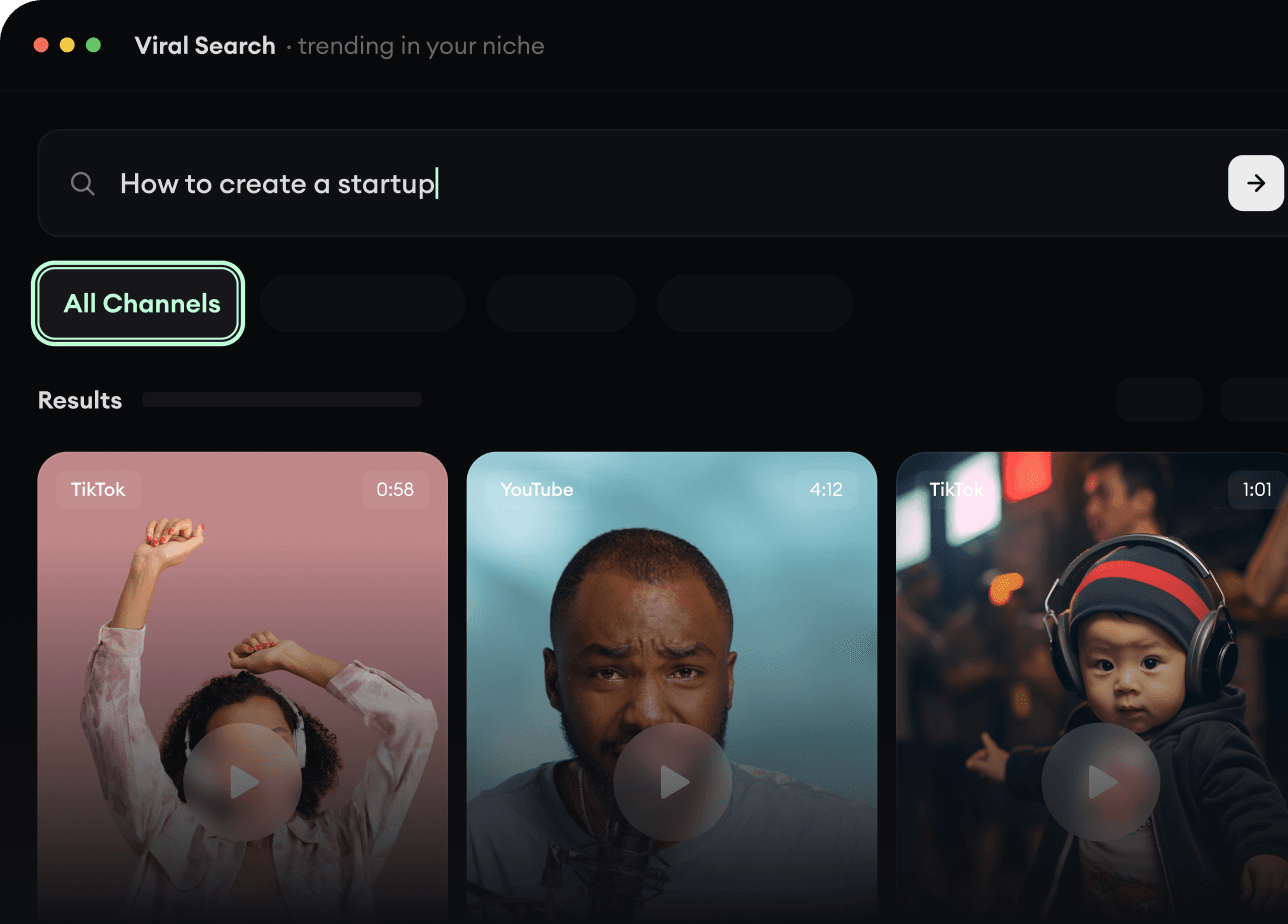
Viral Search en Channel Watcher van Revid AI laten zien welke formats, creators en trends nu de aandacht trekken, en helpen je er je eigen ideeën van te maken.
Ontdek succesvolle videoformats in jouw niche
Volg de creators en kanalen die ertoe doen
Begin met bewezen ideeën in plaats van te gokken
2
Maak van een idee een verhaal.
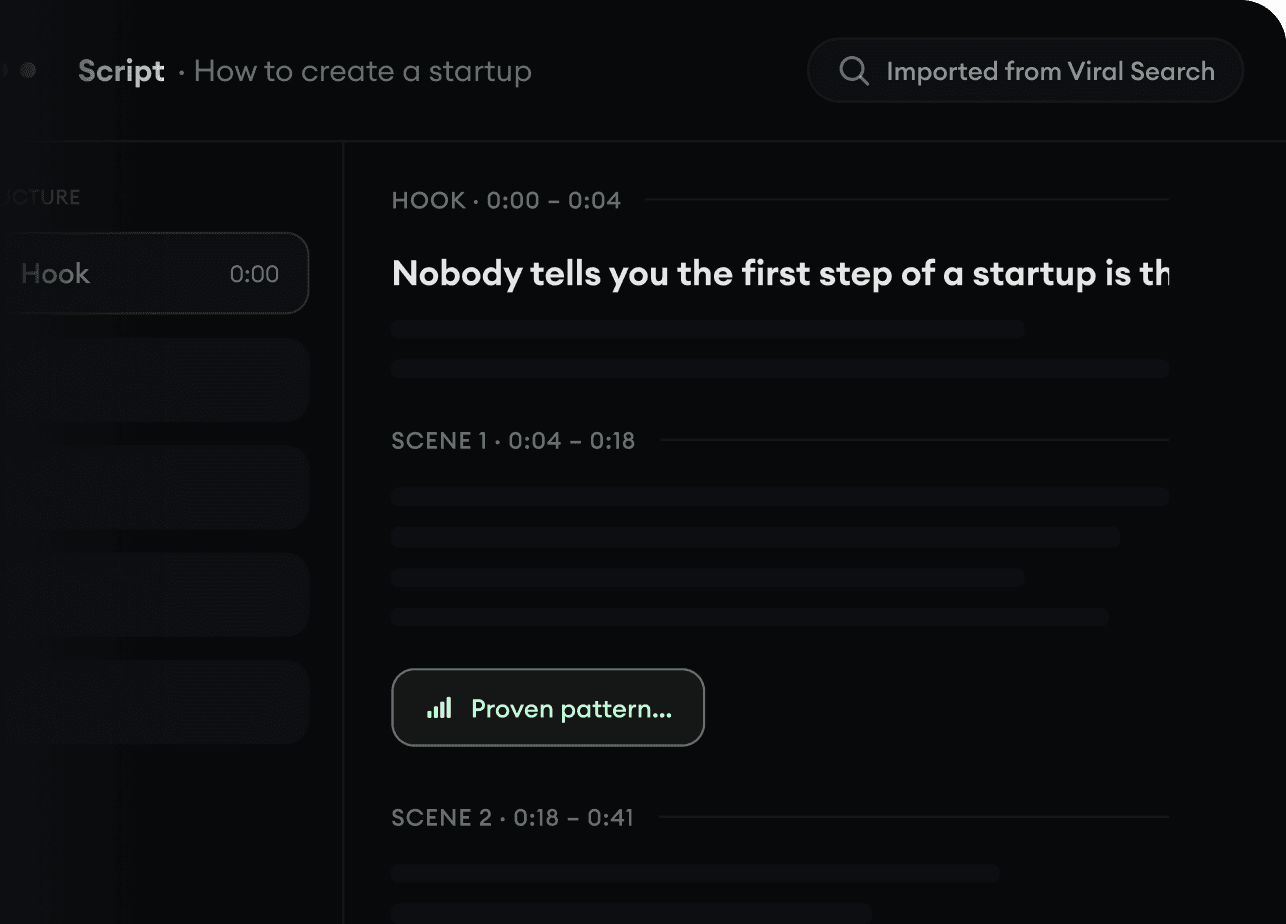
Iets gevonden dat je wilt maken? Revid AI schrijft het script, stelt de opbouw voor en maakt van links, prompts of onderwerpen complete videoconcepten.
Begin met een prompt, onderwerp of URL
Genereer scripts op basis van bewezen patronen
Bouw verhalen die kijkers blijven boeien
3
Genereer de kant-en-klare video.
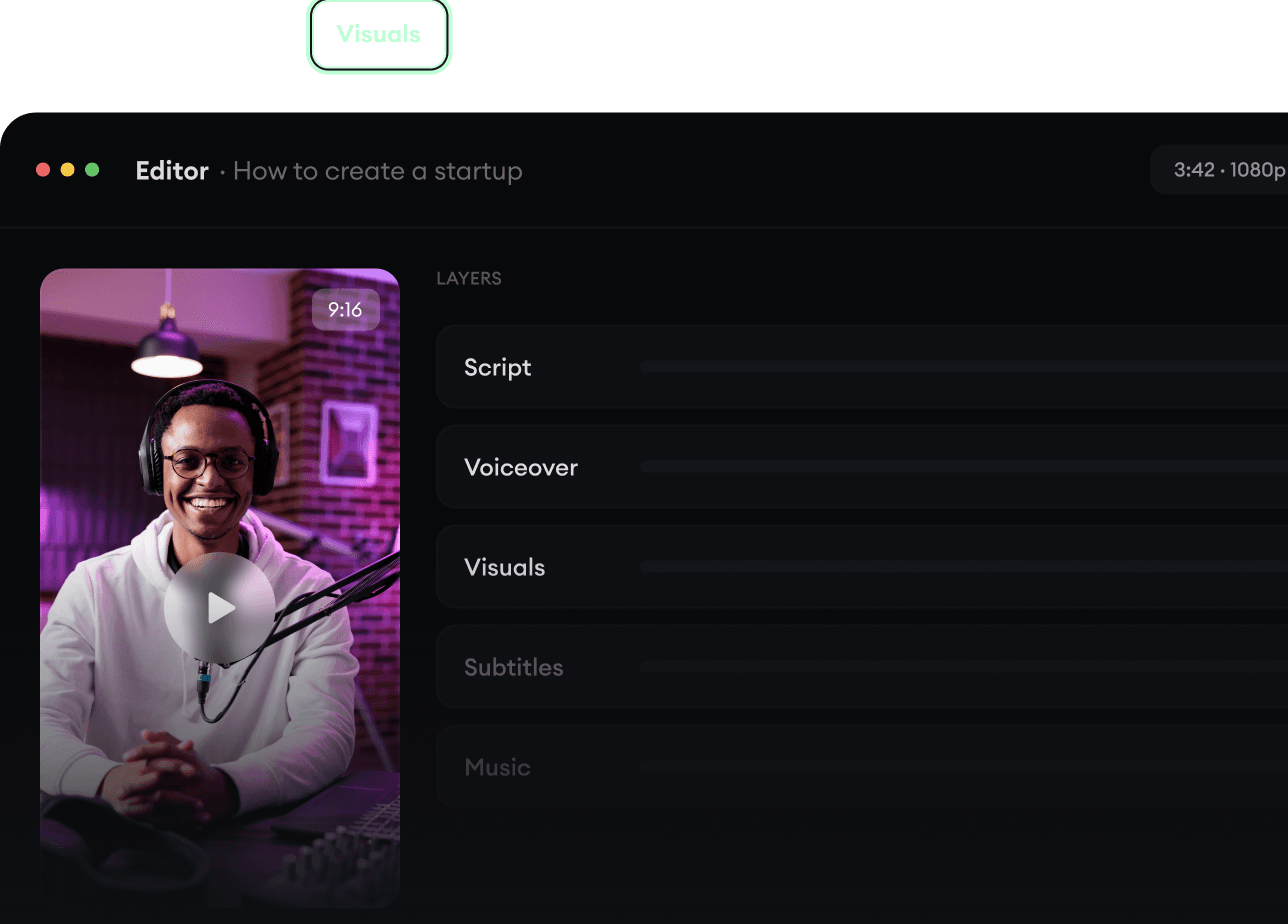
Script, voice-over, beelden, ondertitels en montage komen samen in één workflow. Geen gedoe meer met vijf verschillende tools.
Maak van tekst complete video's van meerdere minuten
Genereer alles op één plek
Verfijn het resultaat in de editor
4
Publiceer overal.
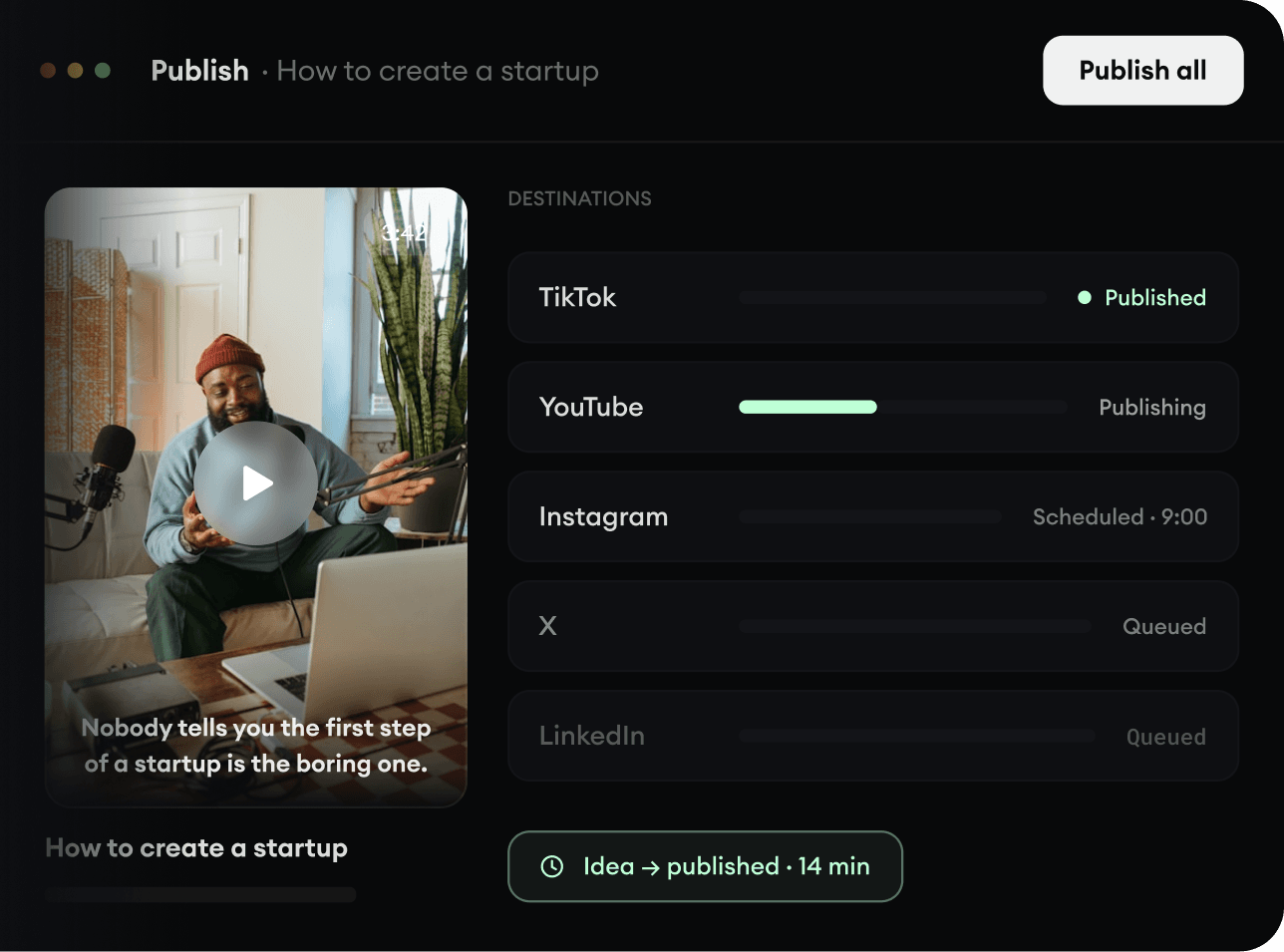
Deel je video's op TikTok, YouTube, Instagram en overal waar je publiek zit.
Publiceer op alle grote platforms
Bereik meer mensen met minder werk
Van idee tot gepubliceerde video in een paar minuten